
Download
Review Article
Producing high Fischer ratio peptides from milk protein and its application in infant formula milk powder
TongXin Shi, You Li*
Beijing Advanced Innovation Center for Food Nutrition and Human Health, Beijing Engineering and Technology Research Center of Food Additives, Beijing Technology and Business University, Beijing, China
Abstract
Milk protein is beneficial for the health of infants and is mainly derived from bovine, sheep, goat or camel milk. High Fischer ratio peptides usually comprise two to nine amino acid residues. The ratio is computed as a molar ratio between branched-chain amino acids (BCAAs) over aromatic amino acids (AAAs) with various claimed health-promoting functions. In this Lilliput review, the classification and nutritional functions of milk proteins are discussed, the physiological functions and preparation methods of high Fischer ratio peptides are introduced, and the application of oligopeptide with unique amino acid composition and physiological functions in infant formula milk powder are reviewed. The development status of relevant industry is also summarized with future prospects. It is concluded that application of high Fischer ratio peptides prepared from milk protein in infant formula food is of great significance and requires further studies.
Key words: milk protein, branched-chain amino acids, aromatic amino acids, Fischer ratio, infant formula milk powder
*Corresponding Author: You Li, Department of Food Quality and Safety, School of Food and Health, Beijing Technology and Business University, No 33, Fucheng Road, Haidian District, Beijing 100048, China. Email: li0187@163.com
Received: 6 September 2020; Accepted: 9 December 2020; Published: 14 January 2021
© 2021 Codon Publications
This is an Open Access article distributed under the terms of the Creative Commons Attribution-NonCommercial-ShareAlike 4.0 International (CC BY-NC-SA 4.0). License (http://creativecommons.org/licenses/by-nc-sa/4.0/)
Introduction
Fischer ratio indicates the value of molar concentration ratio of branched-chain amino acids (BCAA: leucine, isoleucine, and valine) over aromatic amino acids (AAA: tyrosine and phenylalanine) concentration in the peptides mixture (Fischer, 1984). High Fischer ratio (>20) peptides, because of their unique amino acid composition and peptide chain structure, have the following special physiological functions: (1) adjuvant treatment of hepatic encephalopathy which could correct abnormal amino acid patterns and lower the concentration of ammonia in the plasma, thus the amount of precursor AAAs of monamine neurotransmitters into the brain is reduced (Fischer, 1990); (2) promote the balance of negative nitrogen and improve the mental state of hepatic coma. Using BCAA-rich compound, amino acid preparations as nitrogen source would help reduce burden of the liver, adjust BCAA:AAA ratio in plasma, prevent and correct hepatic encephalopathy, reduce the decomposition of skeletal muscle protein, and improve protein synthesis (Moriwaki et al., 2000); (3) lower ammonia in the blood, which otherwise would limit protein intake and lead to malnutrition as well as negative nitrogen balance in the organism (Pimentel et al., 2014); and (4) fight fatigue, hangover, inhibit the growth of cancer cells, and other effects (Howatson et al., 2012). With the continuous development of functional food industry, more and more attention is paid to high Fischer ratio peptide products.
In recent years, studies on high Fischer ratio peptides have focused on plant and/or animal proteins. For example, high Fischer ratio peptides from corn are found to have special physiological function and are easy to digest (Yu et al., 2012). Zhao and Gan (2006) used konjac powder as a raw material; protein was extracted with the first step of enzymatic hydrolysis by adding alkaline protease to mainly obtain AAAs at the terminus of polypeptides chain. Pronase was then added to hydrolyze AAAs. Gel chromatography was used for separation to get high Fischer ratio peptide products. In terms of animal protein, a procedure using immobilized enzymes was developed to obtain protein hydrolysates with a high Fischer ratio from bovine casein—a fraction that represents 24% of total hydrolyzed proteins, with a Fischer ratio of 30.6 (Pedroche et al., 2004). Egg white protein powder was also used as a raw material to get high Fischer ratio peptides thru hydrolysis. The optimal substrate concentration of 5.5% and denatured time of 15 min were determined by nitrogen recovery ratio testing. Alcalase was selected to hydrolyze egg white protein. The composition of analyzed results showed that the Fischer ratio of hydrolysate was 20.46 and the content of free amino acid was 8.04% (Xu et al., 2011). At present, few studies are being conducted on milk protein high Fischer ratio peptides; hence, research on this aspect has important significance for enhancing the added value of dairy products. A summary of main investigations on production of high Fischer ratio peptides from various species is shown in Table 1.
Table 1 Fischer ratio studies for plant or animal proteins.
| Protein sources | Protein hydrolyzing enzymes | Methods used for removing AAA | Peptides molecular weight | Original Fischer ratio | Peptides Fischer ratio | References |
|---|---|---|---|---|---|---|
| Antarctic krill | Alcalase, flavorzyme | Activated carbon adsorption | 779.9 Da | 2.22 | 21.12 | Lan et al., 2019 |
| Corn | α-chymotrypsin, carboxypeptidase A | Idem | 180–1,000 Da | 2.56 | 41.87 | Li et al., 2019 |
| Corn | Alcalase, neutrase, flavorzyme | Idem | <7 kDa | Not available | >20 | Wang et al., 2019a |
| Skipjack | Pepsin, flavorzyme | Idem | 600–1,300 Da | Not available | 37.52 | Wang et al., 2019b |
| Rice | Chymotrypsin, carboxypeptidases A | Chitosan-based biosorbent cross-linked with phenethylamine adsorption | Not available | 0.86 | 21.2 | Jiang et al., 2017 |
| Whitmania pigra | Alcalase, carboxypeptidase A | Activated carbon adsorption or ion-exchange chromatography | <874.0 Da | 3.62 | 31.92 | Ren et al., 2016 |
| Corn | Alkaline protease, neutral protease, papain | Gel filtration chromatography | 231–2,392 Da | Not available | 28.40 | Jiang et al., 2014 |
| Corn | Alcalase | Not available | <5 kDa | 3.0 | 3.1 | Yu et al., 2012 |
| Egg white | Alcalase, protease II | Activated carbon adsorption chromatography | 350–600 Da | Not available | 20.46 | Xu et al., 2011 |
| Flaxseed | Thermolysin, pronase | Activated carbon adsorption | <4 kDa | 1.59 | 23.65 | Udenigwe and Aluko, 2010 |
| Pearl oyster | Pancreatin | Idem | 300–1,800 Da | 3.05 | 24.58 | Zheng et al., 2009 |
| Casein | Trypsin, chymotrypsin, carboxypeptidase A | Gel filtration | 500–1,400 Da | 2.0 | 30.6 | Pedroche et al., 2004 |
| Sunflower | Chymotrypsin, carboxypeptidase-A | Size exclusion chromatography | 750–3,500 Da | 1.8 | 75 | Bautista et al., 2000 |
| Sunflower | Kerase | Idem | <5 kDa | 5.52 | 20.47 | Bautista et al., 1996 |
| Corn | Alkalophilic proteinase, actinase | Idem | Not available | Not available | 20.0 | Tanimoto et al., 1991 |
Milk proteins contain rich bioactive peptides, obtained by hydrolysis, which are not only cheap and safe but also easy to be produced on a large scale. At present, dozens of active peptides have been isolated from different milk protein hydrolyzed products (Saadi et al., 2015). Therefore, high Fischer ratio peptides prepared from milk as the source of high-quality protein could partly replace the infant formula of larger milk protein molecules with peptides or free amino acids obtained from hydrolysis to avoid infant protein allergy and cater the patients with phenylketonuria (Pedroche et al., 2004). This literature review mainly introduced the classification of milk proteins, preparation and purification of high Fischer ratio peptides from milk sources as well as the potential of their application in infant milk powder formula. This may lay foundation for the future research to produce high Fischer ratio peptides from milk protein and the related products.
Milk Protein
Milk protein has high nutritional value and contains all essential amino acids required by a human body. Essential amino acids are the ones that a human body needs but cannot synthesize on its own or cannot synthesize fast enough to meet its needs, and must be obtained from food products. There are nine essential amino acids required by a human body: lysine, tryptophan, phenylalanine, methionine, threonine, isoleucine, leucine, valine, and histidine. Milk protein is rich in the above-mentioned nine amino acids, but there are some differences between different proteins types. The quantity of essential amino acids contained in casein is 45.1 g/100 g, and whey protein has 50.9 g/100 g amino acids (Nimse and Pal, 2015). Milk protein is considered as one of the most nutritious proteins because the content and proportion of amino acids are basically the same as the amount and proportion required by human synthesis. Milk protein can promote the growth and development of human body as well as various metabolic activities whose biological valence reaches 85, and is easy to be absorbed by the body and beneficial for human health. Casein and whey are the two main protein types found in milk in addition of milk fat globular membrane proteins (Hellwig, 2019). The determination of protein levels in various matrices is mostly done by Kjeldahl method of multiplying a conversion factor to the nitrogen content in milk; summing constituent amino acids could be an alternative measurement (Elgar et al., 2020).
Casein
Casein, which is the main component of milk, is the general term for a large group of proteins found in milk (Castro et al., 2009). Casein contains eight essential amino acids, and its protein efficiency ratio is 2.5. As a main protein found in the milk of mammals, including cows, sheep and humans, casein accounts for 80–82% of the total protein content of bovine milk. Human breast milk contains about 29% casein, and sheep’s milk contains 75% of casein. Casein consists of αS1-casein, αS2-casein, β–casein, and β-casein, with a mass ratio of about 4:1:4:1 and confers a protein-stable structure (Donato and Guyomarc’h, 2009).
Casein has a unique micelles structure that contributes tremendously to our understanding of milk water-holding capacity by nanoclusters, and coagulation thru acidification of milk-clotting enzymes (Dalgleish, 2011). Lots of studies have been conducted and are still ongoing but there are much unsolved questions about the structure, size, and distribution of casein (Bouchoux et al., 2010). Holt (2016) compares the amino acid sequences of casein in 20 species and finds a large divergence existing mostly in disorder-promoting residues. All caseins belong to a secreted, calcium phosphate-binding protein group encoded with genes developed from ODontogenic AMeloblast (ODAM)-associated protein (Rehan et al., 2019).
Whey protein
Whey protein is a general term for various protein components of supernatant after removal of casein precipitation from skimmed milk, and it accounts for 20% of total proteins found in bovine milk (Almeida et al., 2016). It consists of α-lactalbumin (α-LA), β-lactoglobulin (β-LG), glycomacropeptide, and lactoferrin (Zapata et al., 2017). α-LA and β-LG account for around 70% of whey protein, and provide good physiological benefits as they are good source of essential amino acids, especially BCAA (Almeida et al., 2016).
When milk is processed into cheese, casein is removed, and whey, lactose, and phospholipids are retained (Chevallier et al., 2016). Whey protein is easy to be digested and a good source of calcium with high bioavailability (Hoffman and Falvo, 2004). A large number of in vitro and in vivo studies have shown that whey protein has the following multiple biological effects: (i) Immunomodulatory and antibacterial effects. Whey contains several constituents with broad-spectrum properties. Immunoglobulin, which accounts for 1% of whey protein weight, has antimicrobial property in the gut (Brody, 2000). (ii) Anticancer effect. A study has shown that whey protein concentrate supplementation makes tumor cells more sensitive to chemotherapy by depleting glutathione (Tsai et al., 2000). (iii) Promoting effect on oral health. Whey protein has been shown to reduce tooth demineralization, and acts as an anti-caries agent (Warner et al., 2001).
Other types
Milk fat globular membrane proteins are tiny spherical objects with a diameter of 0.2–15.0 μm, and are surrounded by a membrane of milk fat globules. They are membrane-binding proteins accounting for 1–2% of milk protein (Michalski et al., 2004). In addition to the above-mentioned different proteins, milk also contains a small amount of alcohol-soluble protein and protein similar to fibrin.
Protein Types in Milk of Different Sources
Human milk
Human milk contains all the nutrients and varieties of bioactive ingredients that body needs. To a large extent, it is a natural, ideal food and affects the growth and development of infants (Klein et al., 2013). Human milk has complete range of essential amino acids. Moreover, protein clots are smaller and easier to be digested and metabolized by the stomach, and this gives higher protein quality (Lönnerdal, 2014).
Bovine milk
Bovine milk is the most commonly used animal milk, accounting for 95% of dairy consumption. It mainly comprises water, protein, fat, lactose, and minerals, and provides the body with essential nutrients (Mestawet et al., 2012). Milk is rich in minerals like calcium, iron, zinc, copper, manganese, and molybdenum, and the ratio of calcium and phosphorus is similar to that found in human milk; therefore, it is conducive for the absorption of calcium by the human body (Kawada, 2017). Bovine milk contains about 3.5% protein, and casein accounts for the largest proportion, followed by lactoalbumin, lactoglobulin, other serum albumins, immunoglobulin, and enzymes. Milk protein contains all the essential amino acids required by the human body, and its relative content is similar to egg protein but with higher digestibility (Liao et al., 2011).
Camel milk
Camel milk is also a high-quality protein source which contains 18 kinds of amino acids, including a variety of essential and non-essential amino acids, other than alanine, isoleucine, glycine, aspartic acid, valine, and cystine. The contents of all other amino acids are higher than those of bovine milk. The amount of total amino acids is also higher than bovine milk. Glutamic acid is the highest and cystine is the lowest amino acid found in both camel and bovine milk (Pihlanto and Korhonen, 2003).
Goat milk
Goat milk mainly provides protein, fat, minerals, and vitamins. It is very close to human milk in terms of compositional structure or nutrient element ratio. Goat’s dairy products are widely favored in western countries because of its nutrition value and taste. Goat milk formula has become of particular interest to many families to feed their infants and the elderly (Ceballos et al., 2009). In common with bovine milk, both provide a large amount of nutrients and bioactive substances (Haenlein, 2004). The difference is that goat milk has the advantage of possessing smaller fat globules, which are similar to human milk, and are easy to be absorbed (Clark and García, 2017). Goat milk contains lower levels of casein than bovine milk and is richer in mineral elements like calcium, phosphorus, magnesium and copper, (Ceballos et al., 2009).
Interestingly, peptides derived from casein seems to be particularly suitable for diet with low AAA, which lays a good rationale for developing high Fischer ratio peptides from milk proteins (Kruger et al., 2019). To give an overview of the potential of being used for raising Fischer ratio, the content and composition of main amino acids found in milk proteins from different sources are given in Table 2.
Table 2 Comparison of protein and essential amino acids in milk from different sources.
| Total protein (%) |
Casein (%) |
Whey protein (%) |
Lysine (mg/g) |
Tryptophan (mg/g) |
Phenylalanine (mg/g) |
Methionine (mg/g) |
Threonine (mg/g) |
Isoleucine (mg/g) |
Leucine (mg/g) |
Valine (mg/g) |
Histidine (mg/g) | |
|---|---|---|---|---|---|---|---|---|---|---|---|---|
| Human milk (Yang et al., 2013) | 2.01 | 40 | 60 | 56.1 | 17 | 29.5 | 12.2 | 31.6 | 40.9 | 83.9 | 48.1 | 17.5 |
| Bovine milk (Xu et al., 2011) | 3.39 | 80 | 20 | 72.8 | 14 | 38.5 | 20.9 | 32.5 | 44.7 | 94.3 | 46.1 | 23.8 |
| Goat milk (Moriwaki et al., 2000) | 3.84 | 75 | 25 | 76.3 | 28 | 39.9 | 20.9 | 39.4 | 45.0 | 99.3 | 54.0 | 24.5 |
| Camel milk (Xu et al., 2011) | 4.31 | 72 | 28 | 28.7 | 11.8 | 17.4 | 10.2 | 17.4 | 19.8 | 36.8 | 22.1 | 10.8 |
| Soy bean milk (Liu et al., 2012) | 3 | 60 | 40 | 63 | 13 | 90 | 26 | 38 | 49 | 82 | 50 | 26 |
Preparation of High Fischer Ratio Peptides from Milk
Protein hydrolyzation
There are two commonly used methods to prepare oligopeptides: enzymatic and microbial fermentation methods. The main proteases used in enzymatic preparation are given in Table 1, some of them (e.g. alcalase and pepsin) are used to cut polypeptide chains and expose AAAs at chain terminus, while others (e.g. flavorzyme and papain) cleave them into free amino acids. The enzymatic reaction conditions are usually mild and the catalytic location is specific. However, this approach has many by-products and low yield (Le Maux et al., 2016). Microbial fermentation method uses some special microorganisms to break down proteins and get polypeptides after separation and purification (Wei et al., 2014). Compared with enzymatic hydrolysis, this method has the advantage of producing enzyme, and enzymatic hydrolysis in one step which saves the purification and separation of enzyme; therefore, it greatly reduces the preparation time of polypeptide and improves production efficiency (Kim et al., 2001). In addition, microorganisms can also produce endopeptidase, which not only modifies the bitter peptide produced during the enzymatic hydrolysis but also presents a fermented fragrance (Ranathunga et al., 2006). A procedure using immobilized enzymes has been developed to obtain protein hydrolysates from bovine casein with a high Fischer ratio. Pre-digestion with trypsin is followed by treatment with chymotrypsin, which generates a hydrolysate enriched in peptides with AAA at the carboxyl end. Carboxypeptidase A is then used to remove these AAA (Pedroche et al., 2004). Wang et al. (2019a) found that oligopeptides with high Fischer ratios depended on sequences in corn protein hydrolysates by differing approaches of enzyme hydrolysis, especially BCAA–AAA-containing oligopeptides. The protease isolated from Bacillus methanolicus LB-1 (protease LB-1) is a microbial protease proved to possess a high milk-clotting activity and could be potentially used in functional cheese processing and development of bioactive peptides of dairy origin (Yang et al., 2020).
Hydrolysate purification
The components in hydrolysate are very complex, including incompletely hydrolyzed protein, polypeptide, oligopeptide, and a large number of free amino acids and salt molecules. If the oligopeptide mixtures with high purity and activity are to be obtained, the proteolytic substances need to be isolated and purified.
The adsorption and removal of AAAs
There are many methods to remove AAAs from hydrolysate of proteins, among which the activated carbon adsorption method is simple and easy to use (Gineys et al., 2016). The adsorption strength of activated carbon to various amino acids is different and the adsorption capacity of phenylalanine and tyrosine should be strong. Through activated carbon, oligopeptides can be separated from free AAAs. Activated carbon has a high affinity for hydrophobic compounds (Cermakova et al., 2017), and both AAAs and BCAAs are hydrophobic amino acids which can be decreased simultaneously by using activated carbon. Therefore, the selection of activated carbon and the optimization of experimental conditions are the main technical key points.
Li et al. (2019) directly performed sequential digestion with α-chymotrypsin and carboxypeptidase A to hydrolyze corn peptides, with the additional step of adsorption of AAAs by activated carbon, and corn oligopeptides with a Fischer ratio of 41.87 and low bitterness were prepared. Directed hydrolysis of corn crude peptides is performed by sequential digestion with the additional step of adsorption of AAAs by activated carbon, corn oligopeptides with a Fischer ratio of 41.87 and low bitterness are obtained (Li et al., 2019). Activated carbon there played the role of decreasing AAA-containing oligopeptide contents.
Ultrafiltration
Ultrafiltration membrane separation takes pressure difference as the driving force, allows the material pass through microporous membrane with different pore diameters, and separates the material according to molecular weight (Yu et al., 2012). During ultrafiltration, molecules which are smaller than the membrane aperture size pass through the membrane with the solvent, while larger molecules are left behind and expelled with the water. Ultrafiltration separation does not change the composition and activity of substances and there is no need to add other additives and performing any pretreatment. Therefore, it is a simple operation with low cost, high recovery rate, time-saving, and is widely used in the separation and purification of substances (Li et al., 2011). Puchalska et al. (2014) used 3-, 5-, and 10-ku molecular weight interception filter to ultrafilter infant formula and identified the sequence structures of endogenous antioxidant peptides and angiotensin-converting enzyme (ACE) inhibitory peptides by further isolation and purification.
Other commonly used methods of peptide purification
Macroporous resin has a porous structure and no exchange functional group. The physical adsorption of molecules is realized by hydrophobic groups or intermolecular forces and elution of adsorbed components under the action of eluent so as to achieve separation and purification (Zhang et al., 2008). Macroporous resin has the advantages of high recovery rate, high efficiency, low operating cost, easy regeneration, good selectivity, and mild separation conditions. Moreover, it has a large specific surface area, ideal pore structure, and unique adsorption property, so is widely used in the separation and purification of substances (Cheng et al., 2011). Kumar et al. (2017) used DA201-C macroporous resin for the separation of protease hydrolysates from wheat germ; the results showed that it was feasible to separate enzymatic hydrolysates with different concentrations of ethanol according to their hydrophobicity, and the enrichment of hydrophobic amino acids significantly enhanced the antioxidant properties of enzymatic hydrolysates by gradient elution. In order to develop brevilaterin’s efficient extraction technology, first, macroporous resin XAD-7HP with good adsorption and desorption effect was screened by investigating the adsorption and desorption capacity of macroporous resin to brevilaterin process, and the optimal technological conditions were obtained through optimization (Ning et al., 2020).
Gel chromatography is a method that uses the network structure of dextran gel to separate substances according to the difference of molecular size in mixture. In the process of separation, molecules greater than the diameter of the gel particle are eluted first because they cannot enter the interior of the gel particle, while smaller molecules enter the interior of the gel particle and are retained for a longer time due to adsorption by the gel (Zhou et al., 2011). Gel chromatographic separation method is widely used in the fields of biotechnology and medicine because of its simplicity and the absence of organic solvent. Three hydrolases (Protex 6L, Protex 7L, and papain) were used to hydrolyze corn gluten meal; oligopeptide mixture was acquired by ultrafiltration then was separated and purified by Sephadex G-15. The relative molecular weight and antioxidant activity of the oligopeptide mixture and separated fractions were determined (Jiang et al., 2014).
Reverse-phase high-performance liquid chromatography (RP-HPLC) is a modern technology that has a series of advantages such as convenient operation, high sensitivity, and good separation effect. Chen et al. (2012) separated and purified the enzymatic hydrolysate of walnut by ultrafiltration, gel chromatography, and RP-HPLC, and finally obtained a peptide fragment with high antioxidant activity. Wu et al. (2007) studied and optimized optimal conditions for the separation of blood pressure-lowering peptide AHP by RP-HPLC: Agilent 1100, reverse-phase column, 4.6 × 250 mm (238TP54), TFA concentration 0.03% (v/v), time 10.30 min, elution velocity 0.8 mL/min, and ACN concentration 12% (v/v).
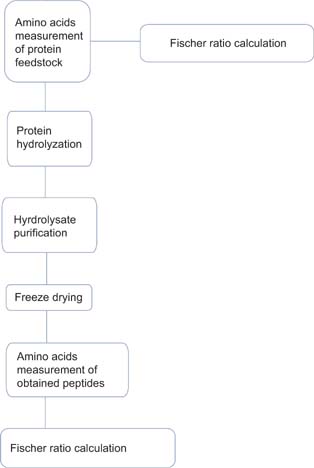
The preparation process of high Fischer ratio peptides is summarized in Figure 1.
Figure 1. Flow chart of preparation of high Fischer ratio peptides.
Application of High Fischer Ratio Peptides in Infant Formula Milk Powder
With the rapid development of food technology in the 20th century and the continuous progress of nutrition, biochemistry, pharmacy, toxicology, and immunology, infant formula continues to develop in the direction of imitating breast milk (Martin et al., 2016). Since the 1990s, the study of infant formula milk powder has been toward improving the digestion and absorption characteristics and strengthening its necessary nutrition and functional components in order to become closer to breast milk (Knip et al., 2010). At present, infant formula milk powder’s emulation of human milk is by no means a simple simulation of protein composition; milk metabolism, biological availability, and activity should also be considered. Lacking bioactive protein is one of the main problems to be solved in the process of infant formula milk powder protein development (Owen et al., 2005).
More specifically, owing to different physiology patterns between infant and adult, incorporating partially hydrolyzed protein (to prevent atopic dermatitis), highly hydrolyzed protein, and free amino acids (to circumvent allergy) in the formula has become very necessary to cater for infant needs (Nutten, 2016). High Fischer ratio peptides can be made from hydrolyzed milk protein and then adsorbed. This cannot only meet the protein requirements of infant formula milk powder but also make full use of the special physiological function of high Fischer ratio peptides to help in counteracting certain pediatric symptoms (e.g. phenylketonuria). Although studies done to raise Fischer ratio are quite extensive, its application in infant formula milk powder is still lacking to our knowledge, as loss of nutrients by heating process and bitterness of peptides might be the limiting factors. Pires et al. (2020) demonstrated that Ohmic heating contributed to the maintenance of essential nutrients and reduction in formation of Maillard reaction by-products in infant milk formulas. Li et al. (2019) obtained less bitter, high Fischer ratio corn peptides by using α-chymotrypsin and carboxypeptidase A followed by activated carbon adsorption of bitterness-causing hydrophobic AAAs, both of which could be the future applying directions for food industry.
Conclusions and Prospects
To sum up, a large number of studies have been conducted for preparing high Fischer ratio peptides, and a relatively mature preparation system has been established for the selection of protein raw materials and extraction process. Scholars have conducted comprehensive research on the preparation technology of high Fischer ratio peptides and invested more energy in the treatment of oligopeptide solution to study the conditions of using activated carbon to remove AAAs. In addition, the bioactivity of high Fischer ratio peptides in anti-fatigue, antioxidation, and auxiliary treatment of liver protection has been explored actively. In recent years, the preparation of high Fischer ratio peptides from plant proteins, such as corn protein powder and soybean protein, has been studied in depth, but there are relatively less studies on animal proteins. Using milk protein as a raw material could have important practical guiding significance for promoting the deep development of dairy industry and further increasing the added value of infant formula products by improving the absorption rate of nutrients present in milk as well as helping to alleviate phenylketonuria syndrome.
Conflict of interest
None
Funding
This work was supported by National Key R&D Program of China (2018YFC1604205).
Compliance with ethical guidelines
Authors confirm that the research met the ethical guidelines.
REFERENCES
Almeida, C.C., Alvares, T.S., Costa, M.P. and Conte-Junior, C.A., 2016. Protein and amino acid profiles of different whey protein supplements. Journal of Dietary Supplements 13(3): 313–323. 10.3109/19390211.2015.1036187
Bautista, J., Corpas, R., Cremades, O., Hernesesi-Pinzrn, I., Ramos, R., Villanueva, A., et al. 2000. Sunflower protein hydrolysates for dietary treatment of patients with liver failure. Journal of the American Oil Chemists’ Society 77(2): 121–126. 10.1007/s11746-000-0020-x
Bautista, J., Hernandez-Pinzon, I., Alaiz, M., Parrado, J. and Millan, F., 1996. Low molecular weight sunflower protein hydrolysate with low concentration in aromatic amino acids. Journal of Agricultural and Food Chemistry 44(4): 967–971. 10.1021/jf940726c
Bouchoux, A., Gesan-Guiziou, G., Pérez, J. and Cabane, B., 2010. How to squeeze a sponge: casein micelles under osmotic stress, a SAXS study. Biophysical Journal 99(11): 3754–3762. 10.1016/j.bpj.2010.10.019
Brody, E.P., 2000. Biological activities of bovine glycomacropeptide. British Journal of Nutrition 84(S1): 39–46. 10.1017/S0007114500002233
Castro, G.A., Maria, D.A., Bouhallab, S. and Sgarbieri, V.C., 2009. In vitro impact of a whey protein isolate (WPI) and collagen hydrolysates (CHs) on B16F10 melanoma cells proliferation. Journal of Dermatological Science 56(1): 51–57. 10.1016/j.jdermsci.2009.06.016
Ceballos, L.S., Morales, E.R., de la Torre Adarve, G., Castro, J.D., Martínez, L.P. and Sampelayo, M.R.S., 2009. Composition of goat and cow milk produced under similar conditions and analyzed by identical methodology. Journal of Food Composition and Analysis 22(4): 322–329. 10.1016/j.jfca.2008.10.020
Cermakova, L., Kopecka, I., Pivokonsky, M., Pivokonska, L. and Janda, V., 2017. Removal of cyanobacterial amino acids in water treatment by activated carbon adsorption. Separation and Purification Technology 173: 330–338. 10.1016/j.seppur.2016.09.043
Chen, N., Yang, H., Sun, Y., Niu, J. and Liu, S., 2012. Purification and identification of antioxidant peptides from walnut (Juglansregia L.) protein hydrolysates. Peptides 38(2): 344–349. 10.1016/j.peptides.2012.09.017
Cheng, Y.H., Zeng, Z.Y., Wu, T.Y., Li, Y.W. and Wang, Z., 2011. Separation and purification of antioxidant oligopeptide from wheat germ protein hydrolysates with macroporous adsorption resin. Food & Machinery 27(1): 19–21. (In Chinese)
Chevallier, M., Riaublanc, A., Lopez, C., Hamon, P., Rousseau, F. and Croguennec, T., 2016. Aggregated whey proteins and trace of caseins synergistically improve the heat stability of whey protein-rich emulsions. Food Hydrocolloids 61: 487–495. 10.1016/j.foodhyd.2016.06.009
Clark, S. and García, M.B.M., 2017. A 100-year review: advances in goat milk research. Journal of Dairy Science 100(12): 10026–10044. 10.3168/jds.2017-13287
Dalgleish, D.G., 2011. On the structural models of bovine casein micelles—review and possible improvements. Soft Matter 7(6): 2265–2272. 10.1039/C0SM00806K
Donato, L. and Guyomarc’h, F., 2009. Formation and properties of the whey protein/κ-casein complexes in heated skim milk —a review. Dairy Science and Technology 89(1): 3–29. 10.1051/dst:2008033
Elgar, D.F., Hill, J.P., Holroyd, S.E. and Peddie, G.S., 2020. Comparison of analytical methods for measuring protein content of whey protein products and investigation of influences on nitrogen conversion factors. International Journal of Dairy Technology 73(4):790–794. 10.1111/1471-0307.12709
Fischer, J.E., 1984. The utilization of BCAA in the treatment of hepatic coma. In: Capocaccia, L., Fischer, J.E. and Rossi-Fanelli, F. (eds.) Hepatic encephalopathy in chronic liver failure. Plenum, New York, NY, Vol. 3, pp. 11–21.
Fischer, J.E., 1990. Branched-chain-enriched amino acid solutions in patients with liver failure: an early example of nutritional pharmacology. Journal of Parenteral and Enteral Nutrition 14(5): 249S–256S. 10.1177/014860719001400518
Gineys, M., Benoit, R., Cohaut, N., Bèc, F. and Delpeux-Ouldriane, S., 2016. Grafting of activated carbon cloths for selective adsorption. Applied Surface Science 370: 522–527. 10.1016/j.apsusc.2015.11.257
Haenlein, G.F.W., 2004. Goat milk in human nutrition. Small Ruminant Research 51(2): 155–163. 10.1016/j.smallrumres.2003.08.010
Hellwig, M., 2019. The chemistry of protein oxidation in food. Angewandte Chemie International Edition 58(47): 16742–16763. 10.1002/anie.201814144
Hoffman, J.R. and Falvo, M.J., 2004. Protein—which is best? Journal of Sports Science & Medicine 3(3): 118. https://www.ncbi.nlm.nih.gov/pmc/articles/PMC3905294/
Holt, C., 2016. Casein and casein micelle structures, functions and diversity in 20 species. International Dairy Journal 60(SI): 2–13. 10.1016/j.idairyj.2016.01.004
Howatson, G., Hoad, M., Goodall, S., Tallent, J., Bell, P.G. and French, D.N., 2012. Exercise-induced muscle damage is reduced in resistance-trained males by branched chain amino acids: a randomized, double-blind, placebo-controlled study. Journal of the International Society of Sports Nutrition 9(1), 20. 10.1186/1550-2783-9-20
Jiang, W., Yang, Y., Tao, R., Jiang, X., Zhou, X. and Zhou, Z., 2017. Preparation of a novel chitosan-based biosorbent cross-linked with phenethylamine for adsorption of aromatic amino acids. Carbohydrate Polymers 176: 236–245. 10.1016/j.carbpol.2017.08.067
Jiang, Z.Q., Li, P., Zhang, M.Z., Xu, T.C. and Wang, Y.X., 2014. Study on separation technology and antioxidant activity of corn high F value oligopeptide. Food and Drug 16(6):397–400. (In Chinese)
Kawada, T., 2017. Effect of total dairy products, milk and calcium intake on the development of type 2 diabetes. Clinical Nutrition 36(6): 1739. 10.1016/j.clnu.2017.07.020
Kim, S.K., Kim, Y.T., Byun, H.G., Nam, K.S., Joo, D.S. and Shahidi, F., 2001. Isolation and characterization of antioxidative peptides from gelatin hydrolysate of Alaska pollack skin. Journal of Agricultural and Food Chemistry 49(4): 1984–1989. 10.1021/jf000494j
Klein, K., Bancher-Todesca, D., Graf, T., Garo, F., Roth, E., Kautzky-Willer, A. and Worda, C., 2013. Concentration of free amino acids in human milk of women with gestational diabetes mellitus and healthy women. Breastfeeding Medicine 8(1): 111–115. 10.1089/bfm.2011.0155
Knip, M., Virtanen, S.M. and Åkerblom, H.K., 2010. Infant feeding and the risk of type 1 diabetes. The American Journal of Clinical Nutrition 91(5): 1506S–1513S. 10.3945/ajcn.2010.28701C
Kruger, C.C., Azevedo, T.D., Piltz, M.T., Silva, A.T. and Candido, L., 2019. Casein-derived peptides as an alternative ingredient for low-phenylalanine diets. Nutricion Hospitalaria 36(3): 718–722. 10.20960/nh.2391
Kumar, D., Chatli, M.K., Singh, R., Mehta, N. and Kumar, P., 2017. Antioxidant and antimicrobial activity of ultra-filtered fractions of camel milk protein hydrolysates under in vitro condition. Indian Journal of Animal Science 87(11): 1391–1395. http://krishi.icar.gov.in/jspui/handle/123456789/13981
Lan, C., Zhao, Y.Q., Li, X.R. and Wang, B., 2019. High Fischer ratio oligopeptides determination from Antartic krill: preparation, peptides profiles, and in vitro antioxidant activity. Journal of Food Biochemistry 43(5): e12827. 10.1111/jfbc.12827
Le Maux, S., Nongonierma, A.B., Barre, C. and FitzGerald, R.J., 2016. Enzymatic generation of whey protein hydrolysates under pH-controlled and non pH-controlled conditions: impact on physicochemical and bioactive properties. Food Chemistry 199: 246–251. 10.1016/j.foodchem.2015.12.021
Li, T., Tian, Y., Sun, F., Wang, Z. and Zhou, N., 2019. Preparation of high Fischer’s ratio corn oligopeptides using directed enzymatic hydrolysis combined with adsorption of aromatic amino acids for efficient liver injury repair. Process Biochemistry 84: 60–72. 10.1016/j.procbio.2019.06.002
Li, Y., Tang, A.G. and Mu, S., 2011. HPLC–FLD determination of serum aromatic amino acids: application in chronic kidney disease patients. Clinica Chimica Acta 412(11–12): 1032–1035. 10.1016/j.cca.2011.02.015
Liao, Y., Alvarado, R., Phinney, B. and Lönnerdal, B., 2011. Proteomic characterization of human milk fat globule membrane proteins during a 12-month lactation period. Journal of Proteome Research 10(8): 3530–3541. 10.1021/pr200149t
Liu, X.Q., Tu, C.H., Zhang, L.H. and Lu, J., 2012. Research status of nutritional and health function of soybean protein. Journal of Beijing Technology and Business University (Natural Science Edition) 30(02):1–6. (In Chinese)
Lönnerdal, B., 2014. Infant formula and infant nutrition: bioactive proteins of human milk and implications for composition of infant formulas. The American Journal of Clinical Nutrition 99(3): 712S–717S. 10.3945/ajcn.113.071993
Martin, C.R., Ling, P.R. and Blackburn, G.L., 2016. Review of infant feeding: key features of breast milk and infant formula. Nutrients 8(5): 279. 10.3390/nu8050279
Mestawet, T.A., Girma, A., Ådnøy, T., Devold, T.G., Narvhus, J.A. and Vegarud, G.E., 2012. Milk production, composition and variation at different lactation stages of four goat breeds in Ethiopia. Small Ruminant Research 105(1–3): 176–181. 10.1016/j.smallrumres.2011.11.014
Michalski, M.C., Ollivon, M., Briard, V., Leconte, N. and Lopez, C., 2004. Native fat globules of different sizes selected from raw milk: thermal and structural behavior. Chemistry and Physics of Lipids 132(2): 247–261. 10.1016/j.chemphyslip.2004.08.007
Moriwaki, H., Tajika, M., Miwa, Y., Kato, M., Yasuda, I., Shiratori, Y., et al. 2000. Nutritional pharmacotherapy of chronic liver disease: from support of liver failure to prevention of liver cancer. Journal of Gastroenterology 35(Suppl 12): 13–17. https://pubmed.ncbi.nlm.nih.gov/10779208/
Nimse, S.B. and Pal, D., 2015. Free radicals, natural antioxidants, and their reaction mechanisms. RSC Advances 5(35): 27986–28006. 10.1039/C4RA13315C
Ning, Y.W., Zhang, M.X., Su, D., Fu, Y.N., Hou, L.L., Wang, Z.X., et al. 2020. Extraction of antimicrobial peptide brevilaterin from Brevibacilluslaterosporus by macroporous resin. Food and Fermentation Industries, 46(05):9–16. (In Chinese)
Nutten, S., 2016. Proteins, peptides and amino acids: role in infant nutrition. Nestlé Nutrition Institute Workshop Series 86, pp. 1–10. 10.1159/000442697
Owen, C.G., Martin, R.M., Whincup, P.H., Smith, G.D. and Cook, D.G., 2005. Effect of infant feeding on the risk of obesity across the life course: a quantitative review of published evidence. Pediatrics 115(5): 1367–1377. 10.1542/peds.2004-1176
Pedroche, J., Yust, M.M., Lqari, H., Girón-Calle, J., Vioque, J., Alaiz, M, et al. 2004. Production and characterization of casein hydrolysates with a high amino acid Fischer’s ratio using immobilized proteases. International Dairy Journal 14(6), 527–533. 10.1016/j.idairyj.2003.11.002
Pihlanto, A. and Korhonen, H., 2003. Bioactive peptides and proteins. Advances in Food and Nutrition Research 47(4): 175–276. 10.1016/S1043-4526(03)47004-6
Pimentel, F.B., Alves, R.C., Costa, A.S., Torres, D., Almeida, M.F. and Oliveira, M.B.P., 2014. Phenylketonuria: protein content and amino acids profile of dishes for phenylketonuric patients. The relevance of phenylalanine. Food Chemistry 149(8), 144–150. 10.1016/j.foodchem.2013.10.099
Pires, R.P.S., Cappato, L.P., Guimarães, J.T., Rocha, R.S., Silva, R., Balthazar, C.F., et al. 2020. Ohmic heating for infant formula processing: evaluating the effect of different voltage gradient. Journal of Food Engineering 280: 109989. 10.1016/j.jfoodeng.2020.109989
Puchalska, P., Marina, M.L. and García, M.C., 2014. Isolation and identification of antioxidant peptides from commercial soybean-based infant formulas. Food Chemistry 148: 147–154. 10.1016/j.foodchem.2013.10.030
Ranathunga, S., Rajapakse, N. and Kim, S.K., 2006. Purification and characterization of antioxidative peptide derived from muscle of conger eel (Conger myriaster). European Food Research and Technology 222(3–4): 310–315. 10.1007/s00217-005-0079-x
Rehan, F., Ahemad, N. and Gupta, M., 2019. Casein nanomicelle as an emerging biomaterial—a comprehensive review. Colloids and Surfaces B: Biointerfaces 179: 280–292. 10.1016/j.colsurfb.2019.03.051
Ren, Y., Yang, Y., Wu, W., Zhang, M., Wu, H. and Li, X., 2016. Identification and characterization of novel anticoagulant peptide with thrombolytic effect and nutrient oligopeptides with high branched chain amino acid from Whitmaniapigra protein. Amino Acids 48(11): 2657–2670. 10.1007/s00726-016-2299-8
Saadi, S., Saari, N., Anwar, F., Hamid, A.A. and Ghazali, H.M., 2015. Recent advances in food biopeptides: production, biological functionalities and therapeutic applications. Biotechnology Advances 33(1): 80–116. 10.1016/j.biotechadv.2014.12.003
Tanimoto, S.Y., Tanabe, S., Watanabe, M. and Arai, S., 1991. Enzymatic modification of zein to produce a non-bitter peptide fraction with a very high Fischer ratio for patients with hepatic encephalopathy. Agricultural and Biological Chemistry 55(4): 1119–1123. 10.1271/bbb1961.55.1119
Tsai, W.Y., Chang, W.H., Chen, C.H. and Lu, F.J., 2000. Enhancing effect of patented whey protein isolate (Immunocal) on cytotoxicity of an anticancer drug. Nutrition and Cancer 38(2): 200–208. 10.1207/S15327914NC382_9
Udenigwe, C.C. and Aluko, R.E., 2010. Antioxidant and angiotensin converting enzyme-inhibitory properties of a flaxseed protein-derived high Fischer ratio peptide mixture. Journal of Agricultural and Food Chemistry 58(8): 4762–4776. 10.1021/jf100149w
Wang, Y., Song, X., Feng, Y. and Cui, Q., 2019a. Changes in peptidomes and Fischer ratios of corn-derived oligopeptides depending on enzyme hydrolysis approaches. Food Chemistry 297: 124931. 10.1016/j.foodchem.2019.05.205
Wang, Z.G., Ying, X.G., Wang, Y.F., Yu, X.W. and Luo, H.Y., 2019b. Structural analysis and activity evaluation of high Fischer ratio oligopeptides from minced meat of Skipjack (Katsuwonuspelamis). Journal of Aquatic Food Product Technology 28(4):1–13. 10.1080/10498850.2019.1683927
Warner, E.A., Kanekanian, A.D. and Andrews, A.T., 2001. Bioactivity of milk proteins: 1. Anticariogenicity of whey proteins. International Journal of Dairy Technology 54(4): 151–153. 10.1046/j.1364-727x.2001.00029.x
Wei, R., Huang, C., Luo, H. and Song, R., 2014. Progress in preparation and application of high Fischer ratio oligopeptides derived from food protein source. Food Science 35(15): 289–294. (In Chinese)
Wu, Y.L., Deng, M.C. and Liang, S.Z., 2007. Application of RP-HPLC in isolation and purification of recombinant E.coli BL21 expressing antihypertensive peptides. Journal of Guangdong Industry Technical College 6(03): 27–29, 42. (In Chinese)
Xu, W., Wang, X.B. and Chi, Y.J., 2011. Preparation of oligopeptide mixture with a high Fischer ratio from egg white proteins. Applied Mechanics and Materials 140: 406–410. 10.4028/www.scientific.net/amm.140.406
Yang, Y., Bu, D., Zhao, X., Sun, P., Wang, J. and Zhou, L., 2013. Proteomic analysis of cow, yak, buffalo, goat and camel milk whey proteins: quantitative differential expression patterns. Journal of Proteome Research 12(4): 1660–1667. 10.1021/pr301001m
Yang, Z.J., Zheng, Z., Cai, M., Zhao, X., Luo, T.Q., Li, R.K., et al. 2020. Proteolytic characteristics of protease from Bacillus methanolicus and bioactivity of casein hydrolysates obtained with it. Food Science 41(14): 153–160. (In Chinese)
Yu, G.C., Lv, J., He, H., Huang, W. and Han, Y., 2012. Hepatoprotective effects of corn peptides against carbon tetrachloride=induced liver injury in mice. Journal of Food Biochemistry 36(4): 458–464. 10.1111/j.1745-4514.2011.00551.x
Zapata, R.C., Singh, A., Pezeshki, A., Nibber, T. and Chelikani, P.K., 2017. Whey protein components—lactalbumin and lactoferrin—improve energy balance and metabolism. Scientific Reports 7(1): 1–14. 10.1038/s41598-017-09781-2
Zhang, Y., Jiao, J., Liu, C., Wu, X. and Zhang, Y., 2008. Isolation and purification of four flavone C-glycosides from antioxidant of bamboo leaves by macro-porous resin column chromatography and preparative high-performance liquid chromatography. Food Chemistry 107(3): 1326–1336. 10.1016/j.foodchem.2007.09.037
Zhao, S.S. and Gan, X., 2006. Processing technology of oligo-peptides of high Fischerratio from Konjac fly powder with protease. Biotechnology 16(3): 67–69. (In Chinese)
Zheng, H., Zhang, C., Cao, W., Liu, S. and Ji, H., 2009. Preparation and characterisation of the pearl oyster (Pinctadamartensii) meat protein hydrolysates with a high Fischer ratio. International Journal of Food Science and Technology 44(6): 1183–1191. 10.1111/j.1365-2621.2009.01942.x
Zhou, L., Hou, L.X., Wang, J.S. and Wang X.K., 2011. Preparation and purification of bioactive peptides. Farm Machinery 5(10): 131–133. (In Chinese)